
Learn how to handle difficult parents with proven strategies for martial arts instructors. Turn conflict into communication and build a stronger dojo community.
The best way to handle difficult parents isn’t with fancy conflict-resolution tactics; it’s by building a dojo culture where those conflicts rarely have a chance to take root. It all starts with clearly communicating your school's philosophy, policies, and expectations from the very first handshake. When you get this right, you shift the parent-instructor dynamic from potentially adversarial to a genuine partnership.
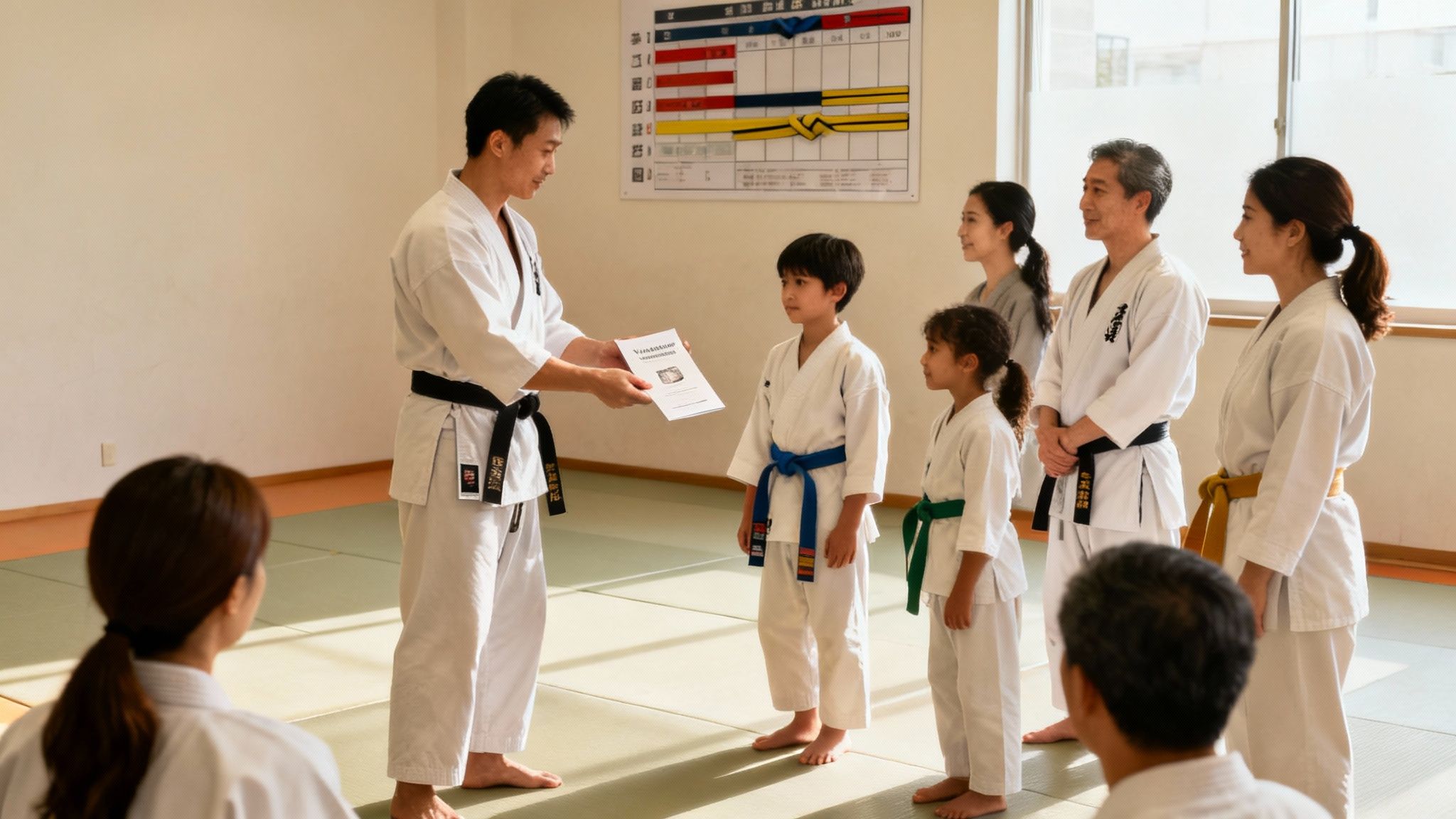
Let's be honest, most conflicts with parents don't come from a place of malice. They come from simple misunderstanding. A parent who seems pushy about belt promotions probably just doesn't grasp the skill, time, and dedication required for advancement. That parent who keeps shouting instructions from the sideline? They likely think they're helping, not realizing they're undermining your authority and distracting their own child.
Prevention is, without a doubt, the most effective strategy. By setting up clear guardrails before problems pop up, you create a framework that turns potential arguments into collaborative chats based on shared goals.
Your parent handbook is your first line of defense. Think of it as more than just a list of rules—it's the constitution for your dojo's culture. A well-thought-out handbook answers the most common questions before they're even asked and establishes firm, professional boundaries from day one.
Make sure it transparently covers the friction points you know will come up:
Just handing someone a booklet and hoping they read it is a recipe for failure. You need a dedicated orientation meeting or a structured onboarding process to truly bring that handbook to life. This is your shot to build a real, personal connection and welcome them into your community.
A strong first impression sets the tone for the entire relationship. When parents feel welcomed, informed, and respected from the beginning, they are far more likely to approach you as an ally when concerns arise.
During orientation, walk new families through the key policies. Don't just read the rules; use real-world examples to make them stick. Instead of just saying "no sideline coaching," explain why it shatters a child's focus and hurts their ability to learn from you. This initial investment of time is one of the smartest things you can do for long-term parent harmony. You can learn more about how to improve the customer onboarding process for your martial arts school to create a seamless experience that gets everyone started on the right foot.
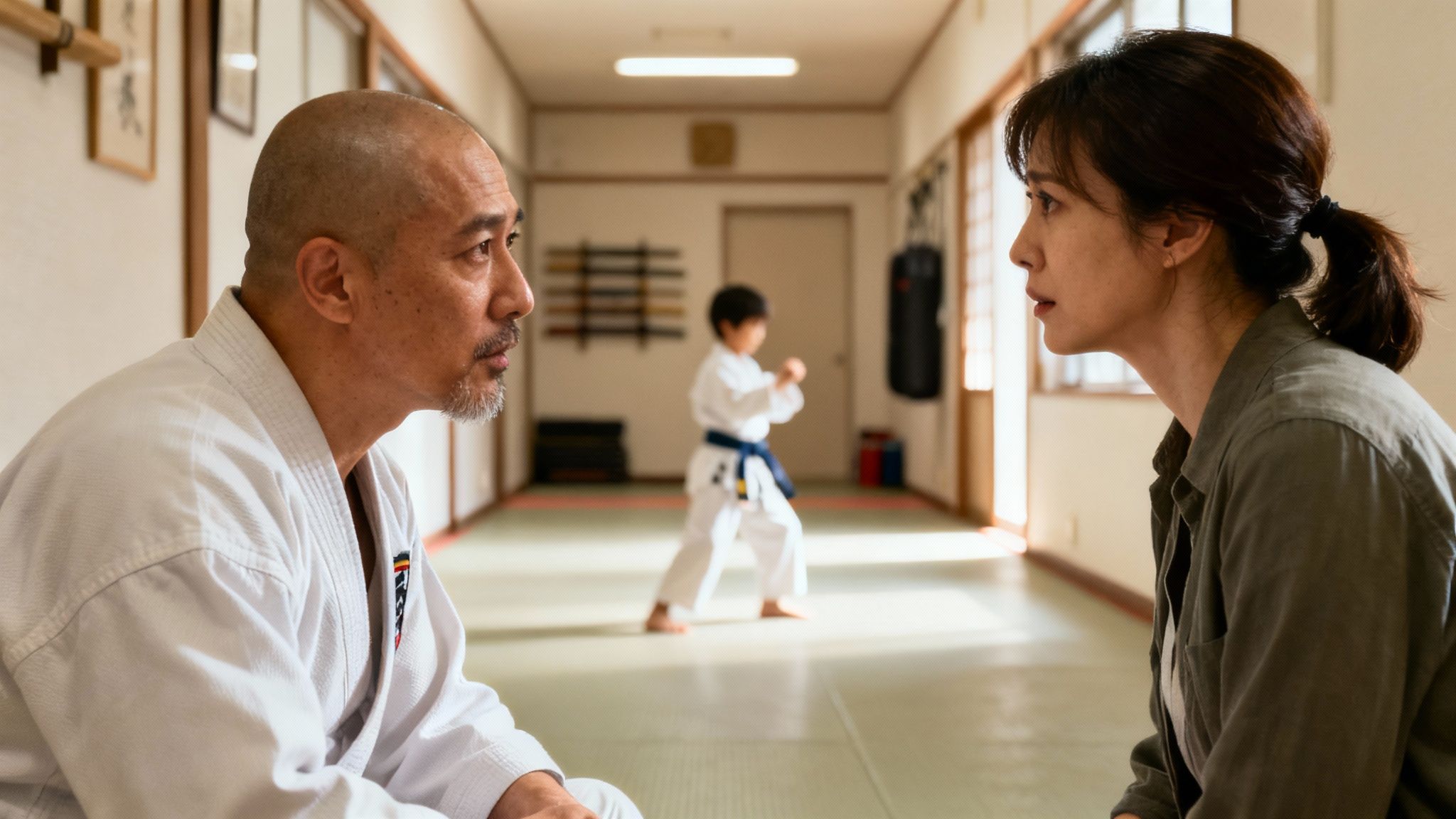
When an upset or demanding parent comes at you, the natural reaction is to put your guard up. It's human nature. But the real secret to handling these tough conversations is to completely flip that mindset.
Nine times out of ten, their frustration has almost nothing to do with you or your teaching. It's a symptom of something much deeper.
Maybe they're worried their kid isn't making friends or keeping up with the other students. Maybe their expectations have been shaped by Hollywood montages where black belts are earned in 90 seconds. And sometimes, it's just stress from their job or personal life spilling over into the one place they feel they have a bit of control—their child’s after-school activities.
Once you start looking for the "why" behind their words, you can shift from a defensive stance to an empathetic one. That’s the key that unlocks de-escalation.
After a few years on the mats, you start seeing the same characters show up. These aren't bad people; they're just parents driven by powerful motivations that sometimes come out sideways. Spotting these archetypes helps you prepare for their specific concerns and adjust your communication on the fly.
We've all seen them. Recognizing them is the first step to truly understanding them.
Here's a quick look at some of the common parent archetypes you might encounter, what really drives them, and a good first move to build a bridge.
Remember, even when it’s expressed poorly, almost all of it comes from a place of love and concern.
Understanding the real driver lets you address the parent's actual fear, not just their surface-level complaint. The Sideline Coach doesn't need to be silenced; they need to be shown how their shouts disrupt focus and then given a new, productive way to channel their support.
Sometimes, the pressure cooker is completely outside the dojo. Research has shown that nearly 40% of children in the U.S. lack strong emotional bonds with their parents, which can ramp up parental stress and influence behavior. You can dive deeper into the research on the importance of parent-child emotional bonds on evidencebasedmentoring.org.
Knowing this broader context helps build your empathy. It’s a reminder that a parent’s intensity might be coming from a place of deep insecurity about their own parenting. Recognizing that is your first step toward a real, productive conversation.

Knowing what to say when a parent is upset isn’t an instinct—it’s a skill. And like any good kata, it requires a simple, repeatable playbook you can rely on when the pressure is on.
When emotions are running high, trying to win the argument is a losing battle. The real goal is to de-escalate the situation so you can actually have a productive conversation.
Your first move, always, is to get the conversation off the training floor and into a private space. The mat is for your students, not for heated debates with their parents. A simple, firm line like, "I can see this is important to you. Let's step into the office so we can give this the full attention it deserves," works wonders. It validates their concern while letting you control the setting.
Once you’re in private, your strategy comes down to a three-part approach. It keeps you in the driver’s seat while making the parent feel genuinely heard.
A difficult conversation is a lot like a martial arts exchange. You don't meet force with force. You absorb the energy, redirect it, and guide the interaction toward a controlled and positive outcome.
Your body language and phrasing can either pour fuel on the fire or put it out completely. Keep your posture open—uncross your arms, keep your palms relaxed. A calm tone of voice is contagious.
Here are a couple of common scenarios and how to handle them:
It's also worth remembering that family dynamics outside the dojo often spill into these interactions. If you find yourself in consistently contentious situations with the same people, it can be helpful to understand different approaches to high-conflict co-parenting, as these can provide valuable tactics for de-escalation and finding common ground.
If you don't set boundaries, parents will set them for you—and you probably won't like where they draw the lines. Vague or non-existent boundaries are a fast track to burnout. You'll find yourself fielding texts at 10 PM, getting cornered for lengthy progress reports between classes, and feeling like you're always on the clock.
This isn't about being cold or unapproachable. It’s about building a framework for respect.
Setting clear boundaries protects your personal time, your energy, and the professional integrity of your dojo. When parents know exactly how and when to communicate with you, the interactions become smoother, more productive, and far less stressful. Think of it as your first line of defense against misunderstandings spiraling into major conflicts.
First things first: decide how you want to be contacted and when you're available. Then, tell everyone. Post it on the wall, put it in your welcome packet, and mention it during orientation. Managing expectations from day one keeps you from becoming a 24/7 help desk.
Here’s a simple, effective protocol you can adapt:
Your time between classes is sacred. It's when you reset, review your next lesson plan, and get water. A parent who wants a "quick chat" right then can throw off the rhythm for the entire evening. Politely redirecting them isn't rude; it teaches them that important conversations deserve a proper time and place.
A clear structure like this works wonders across different family dynamics and cultural backgrounds. Some parents might think daily check-ins are normal, while others prefer to communicate only when necessary. For instance, research shows that face-to-face weekly contact with mothers in the U.S. is around 54%, but jumps to 85% in Italy. This just goes to show that "normal" communication frequency is all over the map. You can discover more insights about these communication patterns to get a better handle on these differences. Clear, professional boundaries create a level playing field for everyone.
Enforcing boundaries feels awkward at first. The key is to be polite, firm, and consistent. Having a few pre-planned responses in your back pocket makes it so much easier to handle these moments with confidence instead of fumbling for the right words.
Scenario: A parent texts you late at night about a minor issue.
Scenario: A parent is coaching their kid from the sidelines during class.
It's also helpful to understand how ADHD can impact boundaries, as this can sometimes play a role in how a parent perceives or adheres to the rules you set.
Ultimately, consistency is everything. Every time you gently redirect a parent back to the appropriate channel or time, you’re training your entire school community on how to engage with you respectfully. It gets easier every time.
Let's be honest: even with the best communication, some issues with parents just can't be wrapped up in a single chat. When a problem keeps coming back, your absolute best friend is a professional, unemotional record of what’s been happening.
This isn't about building a case against someone. It's about creating a clear, factual timeline to make sure everyone is treated fairly and consistently.
Start a simple, private log for any ongoing parent issue. The key is to keep it objective and stick to the facts: what was said, what was decided, and what happened next. That simple practice is your strongest defense against misunderstandings down the road.
Keeping objective notes is critical. Imagine you had to share this log with another instructor or, in a worst-case scenario, a lawyer. Would it paint a clear, professional picture?
For every tricky interaction, make sure your notes include:
This process keeps communication clear for everyone. The infographic below is a great little cheat sheet for deciding how to handle an issue when it first pops up.
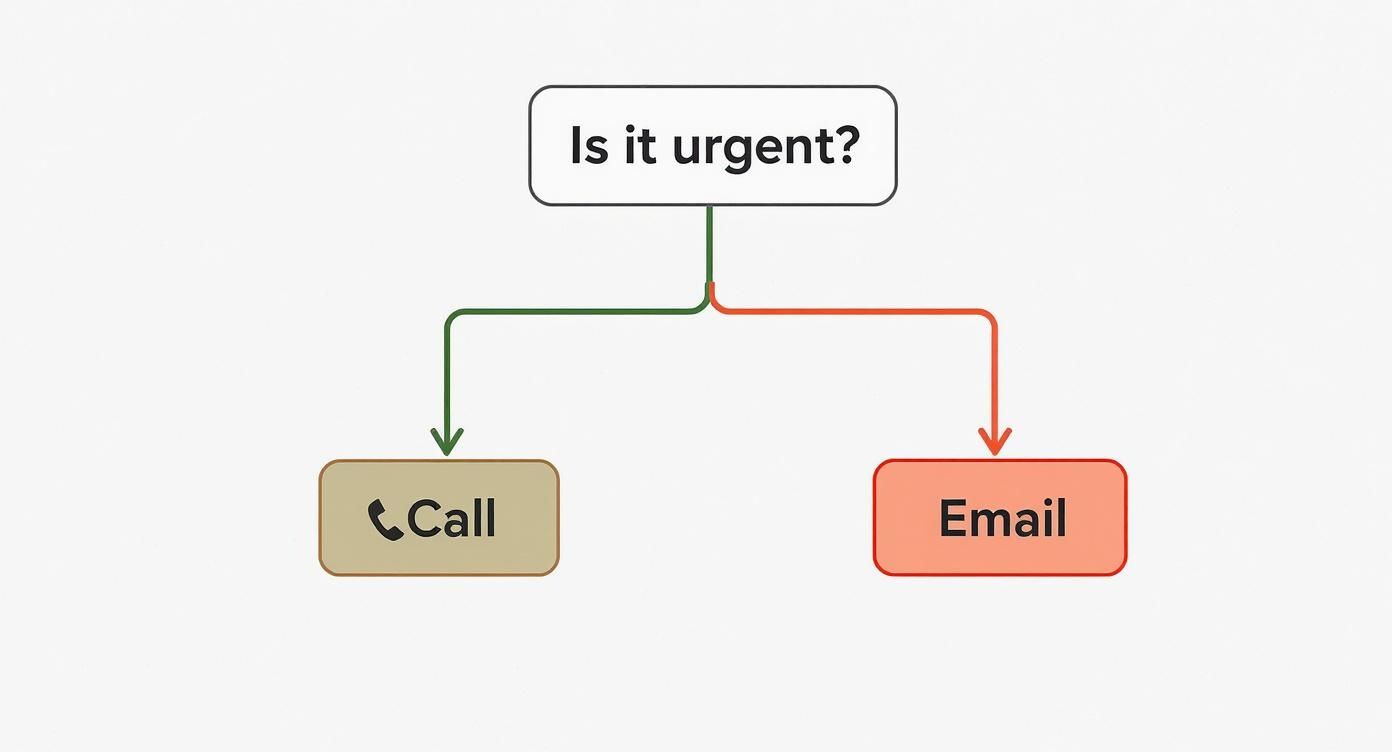
The big takeaway here is to funnel non-urgent issues toward email. It naturally creates a written record you can both refer back to, which is incredibly helpful.
To make this process even clearer for your team, having a standard pathway for resolving conflicts helps ensure everyone handles these situations the same way.
This table outlines a simple, step-by-step approach to managing parent concerns, from the initial conversation to potential escalation. Using a consistent framework like this removes guesswork and ensures fairness.
Following a clear path like this protects both you and the parent, as every step is transparent and documented.
Thankfully, this is rare. But sometimes, a parent's behavior crosses a line. It stops being "difficult" and starts becoming detrimental to the safety and positive atmosphere of your entire dojo. This is no longer a simple conflict; it’s a community issue.
You have a responsibility to protect your students, your staff, and the positive culture you've built. Dismissing a family is a last resort, but it becomes necessary when one person's behavior consistently undermines the well-being of the group.
If a parent’s actions become harassing, threatening, or are just constantly disruptive, you have to escalate. The same goes for repeated safety violations. For more perspective on this, our guide on how to prevent and handle an injury at your gym effectively really drives home the importance of having clear safety protocols that everyone must follow.
If dismissal becomes the only way forward, handle it with professionalism. Schedule a private, brief meeting. State your decision clearly, referencing the pattern of documented behavior and specific violations of your school's code of conduct.
Do not get dragged into an argument. The decision is final.
After the meeting, follow up with a formal letter that confirms the termination of their membership. This provides a final piece of documentation, closing the loop professionally and protecting you legally.
When all is said and done, learning how to handle difficult parents isn't about winning arguments. It's about building a stronger, more connected dojo. Every single strategy we've covered—from proactive communication to setting firm boundaries—serves that one powerful purpose: fostering a resilient and loyal community.
When you approach these challenging conversations with empathy, professionalism, and consistency, you're doing so much more than just putting out fires. You're actively creating a positive environment where students and their families feel respected, heard, and secure.
This is how you transform your school from a place where kids learn kicks and punches into a true community people are proud to belong to.
The real measure of your success isn't the absence of conflict, but your ability to navigate it constructively. This skill builds trust and reinforces your dojo's reputation for both excellent instruction and strong character.
This positive culture has a direct, measurable impact on your retention and growth. Parents who see you lead with integrity don't just stay—they become your biggest advocates.
This foundation is also the secret sauce for improving student engagement in your dojo. A stable, positive environment allows every student to tune out the noise and focus on what truly matters: their own journey on the mat.
The long-term vision is simple: a dojo known far and wide as a supportive, thriving space where everyone can flourish.
Even with the best systems in place, you're going to get thrown a few curveball questions from parents. It just comes with the territory. Here are some quick, field-tested answers to the most common scenarios we see instructors face.
First, take a deep breath. It’s tough not to take this personally, but reacting defensively on the spot never helps. The key is to get them off the training floor and into a private conversation.
Use what I call the "Listen, Acknowledge, Redirect" method. Let them air their specific criticisms without interruption. Then, acknowledge the root of their concern: "I understand you're worried about whether Billy is learning the correct technique, and I appreciate how much you care."
Finally, redirect the conversation by explaining the why behind your methods. Often, parents just don’t see the building blocks. Explaining how a "sloppy" basic drill is actually building the foundation for an advanced kick can completely change their perspective.
This is a classic. The best defense is a good offense—address it proactively in your parent handbook and during new student orientations.
But when it happens (and it will), a gentle, in-person reminder after class works wonders. Don't call them out in front of everyone. Wait until class is over, approach them with a smile, and start with a positive. "I love how invested you are in Sarah's progress. It's fantastic to see."
Then, state the rule as a benefit to their child: "To help all our students build focus and learn to trust their instructors, we ask that all coaching comes from us on the mat. It really helps them tune into a single voice during training."
Remember, the goal isn't to shame the parent. It's to educate them on how they can best support the learning environment. Be consistent. If you enforce it for one parent, you have to enforce it for everyone.
This one stings because we see the little wins every day that parents might miss. Start with empathy. They just want their child to succeed, and that's a good thing.
Schedule a specific time to talk—don't try to have this conversation in a busy lobby. Before you meet, pull up their child's attendance and training records. Come prepared with concrete examples of their actual progress.
Focus on the character development wins that go beyond flashy kicks. "Last month, James couldn't get through warm-ups without getting distracted. Now, he's holding his focus for the entire class. That's a huge step." Frame martial arts as a marathon, not a sprint. Reassure them that every student's journey is unique, which is one of the most powerful lessons we teach.
Handling parent communications, scheduling, and tracking student progress can feel like a full-time job on its own. Martialytics gives you the professional tools to manage your school, freeing you up to build the positive, supportive community your students and their families deserve. Learn more about Martialytics.
No credit card required. No lock in contracts. Start your 30-day free trial to see immediate improvements.

Book your free demo with one of the co-founders of Martialytics, Brad or Allen, depending on your time-zone.
We'll do this on Zoom video conferencing software for awesome screen sharing so please make sure you have the app or are good to go before the time starts.

The easiest to use Martial Arts School Management Software in the world.



